Told from Above · серия Shramko 360
 Автор: Андрей Шрамко
Быдгощская Венеция и Мельничный остров, Быдгощ — полёт 360° с гидом
- 8 мин
- 360° · 8K
- Открытые субтитры
- Онлайн с 5 октября 2026 г.
Чем в Быдгоще выводили пятна от кофе и вина? Бензином.
О фильме
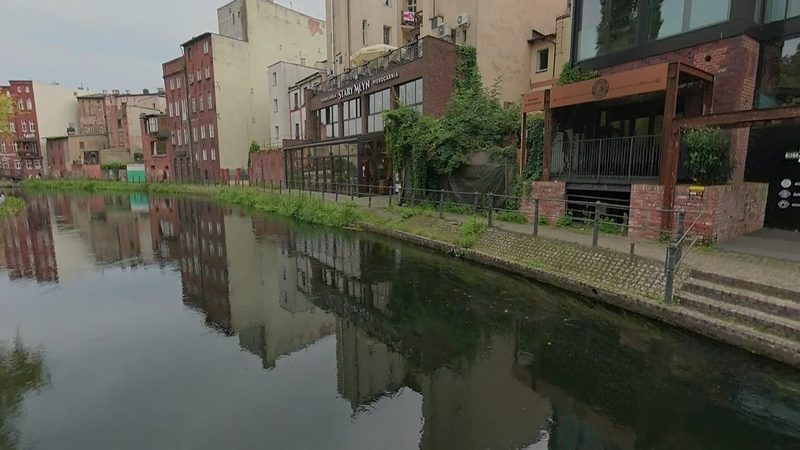
В красильне Вильгельма Коппа машины стирали в бензине одежду, которую привозили из Торуня и Грудзёндза. В 1893 году неосторожный рабочий спалил всё предприятие. В этом фильме я пролетаю над Быдгощской Венецией (Wenecja Bydgoska) — домами, которые стоят прямо над водой, — над Мельничным островом и красными мельницами Ротера.
Ещё одна история из фильма: на Мельничном острове Станислав Циковский, фаворит короля Сигизмунда Вазы, открыл частный монетный двор, который со временем стал королевским. Гид рассказывает и о том, кто выиграл на аукционе право назвать мостик именем Кшиштофа Кленчона и откуда на мостике Быдгощской Венеции столько навесных замков.
Если показываете Быдгощ гостям, начните прогулку именно здесь. С Мельничного острова лучше всего видны дома Быдгощской Венеции, стоящие над водой.
Места в фильме
- Быдгощская Венеция (Wenecja Bydgoska) Карта
- Мельничный остров (Wyspa Młyńska) Карта
- Мельницы Ротера (Młyny Rothera) Карта
- Красильня Вильгельма Коппа Карта
- Мостик Кшиштофа Кленчона Карта
- Мостик Быдгощской Венеции Карта
Полный текст гида (на английском)
What took coffee, tea, beer and wine stains out of clothes? At Farbiarnia Wilhelma Koppa, the tall graffitied brick block, special machines washed clothes from Toruń and Grudziądz in gasoline.
Named by auction: Kładka Krzysztofa Klenczona w Bydgoszczy, the humped footbridge. At a charity finale, naming it went under the hammer, and the winner, from Kielce, chose Klenczon, guitarist of Czerwone Gitary.
A careless worker burned this whole plant to the ground. Back at Farbiarnia Wilhelma Koppa, it happened in 1893, in the laundry, where gasoline served as the cleaning agent.
Chocolate and a newspaper came out of Bydgoszcz Venice, the houses over the water. The Lukullus factory made sweets until 1939, printers ran off the Bydgoszcz Daily, and August Franke refined spirits.
Which drama first put Bydgoszcz Venice on screen? The series Czterej pancerni i pies, where Tomasz Czereśniak swims across towards its houses, then hides in a German truck on Świętej Trójcy.
A town gate up behind these houses doubled as a jail. Brama Poznańska, at the west end of Długa, was pulled down in 1828: its passage was too low and narrow.
Spirit-making once heated a public bath. The Franke company owned it on Czartoryskiego street and used warm water from spirit production; a courtyard bas-relief, Children in a Bath, recalls it.
A secret flat hid on Świętej Trójcy, the street behind these houses. During the Second World War, the underground Armia Krajowa ran it under the code name Trzy trójki.
Grain came here by water. As late as the 80's, barges sailed into the Grain Canal at Młyny Rothera, the red-brick mills, where a suction pipe drew the grain into the granaries.
A Prussian prince's last inspection trip ended here. Prince August Hohenzollern died at the Hotel pod Żółtym Krzyżem, on the corner of the square up the slope behind these houses.
A film was shot on this footbridge. Kładka Wenecji Bydgoskiej, the dark arched footbridge hung with padlocks, and the tenements by Wełniany Rynek were the backdrop for Andrzej Maleszka's Magiczne drzewo.
Who made the local factories' steam engines? In the mid-nineteenth century Friedrich Eberhardt began building them in his foundry on Świętej Trójcy, the start of the later Spomasz works.
A boy with a spare horse waited at the foot of this slope. The oldest horse-tram line climbed through Wełniany Rynek to Poznańska, and the horses' shoes wore rope against noise and slipping.
Why the padlocks? Back at Kładka Wenecji Bydgoskiej, lovers lock them onto its railings, carrying on a custom that couples first began on Most Miłości, near Opera Nova.
Who uses these old mills today? Festivals do: since reopening in 2021, Młyny Rothera, the red-brick mills with the chimney, have hosted the Vintage Photo Festival and Chris Niedenthal's photos of March 1981.
A German emperor once bathed in foam here. Water from the mill wheels churned the Wellenbad into froth, and Emperor Frederick the Third, Queen Victoria's son-in-law, counted it among the town's great sights.
A king's mint stood on this island. On Mill Island, the park point between the channels, Stanisław Cikowski, favourite of King Sigismund Vasa, opened a private mint that became the royal mint.
Steam replaced water right here. In 1859 Czerwony Spichlerz, the red-brick block on Mennica, began as Camphaus's steam mill, built where the Henryk watermill had been pulled down.
A bridge here was named after a saw. Most Pilarski, near the Red Granary, joined Wyspa Mennicza to the western island, and its name came from a water-powered sawmill by the crossing.
The granary became a gallery. Turning Czerwony Spichlerz and the Miller's House into Galeria Sztuki Nowoczesnej, the Modern Art Gallery, earned the regional museum a nomination for the Sybilla 2009 award.
Old maps tell this crossing's story. Where Most Młyński w Bydgoszczy, the flat bridge, now stands, Erik Dahlberg's town plan already shows a bridge; on Greth's later plan it is gone.
Painters loved the houses that once stood on this bank. The houses between the Młynówka and the street, among them the galeriowec and a half-timbered granary, came down in 1990.
This tavern began as a granary. Karczma Młyńska, the half-timbered house, was built around 1835 with brick infill and first stored bagged grain.
Poles were barred from this church. In January 1940 the occupiers handed over Bydgoszcz Cathedral, the red-brick church with the green lantern, and forbade any Pole to enter; Father Alojzy Kaluschke became pastor.
Whitewater in the town centre? In 1996 the rebuilt weir gave the Młynówka's mouth rocky obstacles and a kayak slalom course, the only one in Poland and Europe in a city centre.
Beer was brewed along this water. In old Polish times Tomasz Ossowski brewed beer and distilled spirits on Przyrzecze, and in 1637 his family founded a chapel in the Fara.
Who kept this opera going? Opera Nova, the white rotundas beyond the Brda, survived a 1977 ban on public buildings outside the capital because Józef Majchrzak, the regional party chief, kept building.
King John Casimir met Brandenburg's Elector in Bydgoszcz Town Hall, then the Jesuits' college, and their talks ended in the Treaty of Bromberg. Across the Brda stands Poczta Główna, the red post office.
A museum hid here. In December 1939 the Municipal Museum's collections moved into the Polish House before Nazis demolished their Old Market Square home. The House looks across the Brda to Theatre Square.
Back at Bydgoszcz Cathedral, across from Biały Spichlerz: in 1684 the neighbouring watermill burned, and wind drove the flames onto the church.
Как сделан фильм
8K (7680×3840), 60 кадров/с. Открытые субтитры на английском впечатаны в изображение: три копии вокруг обзора, одна — рядом с местом, о котором идёт речь. Озвучка — синтетический голос на английском.
Факты гида взяты из:
- Википедия (на польском): Farbiarnia Wilhelma Koppa w Bydgoszczy
- Википедия (на польском): Wenecja Bydgoska
- Википедия (на польском): Wyspa Młyńska w Bydgoszczy
- Википедия (на английском): Mill Island, Bydgoszcz
- Википедия (на польском): Młyny Rothera
- Википедия (на польском): Kładka Krzysztofa Klenczona w Bydgoszczy
- Википедия (на польском): Kładka Wenecji Bydgoskiej
Ко всем фильмамДля администрации городаФильмы для глухих и слабослышащих
Андрей Шрамко
Инженер и кинематографист, живу в Быдгоще. Снимаю 360° в движении с 2015 года.